

[ Intelligence community ]
Intelligence work relies on data flow; when collection teams, mobile exploitation nodes, or temporary sites lose reliable reachback, feeds stall, transfers fail, and analysts lose precious time.
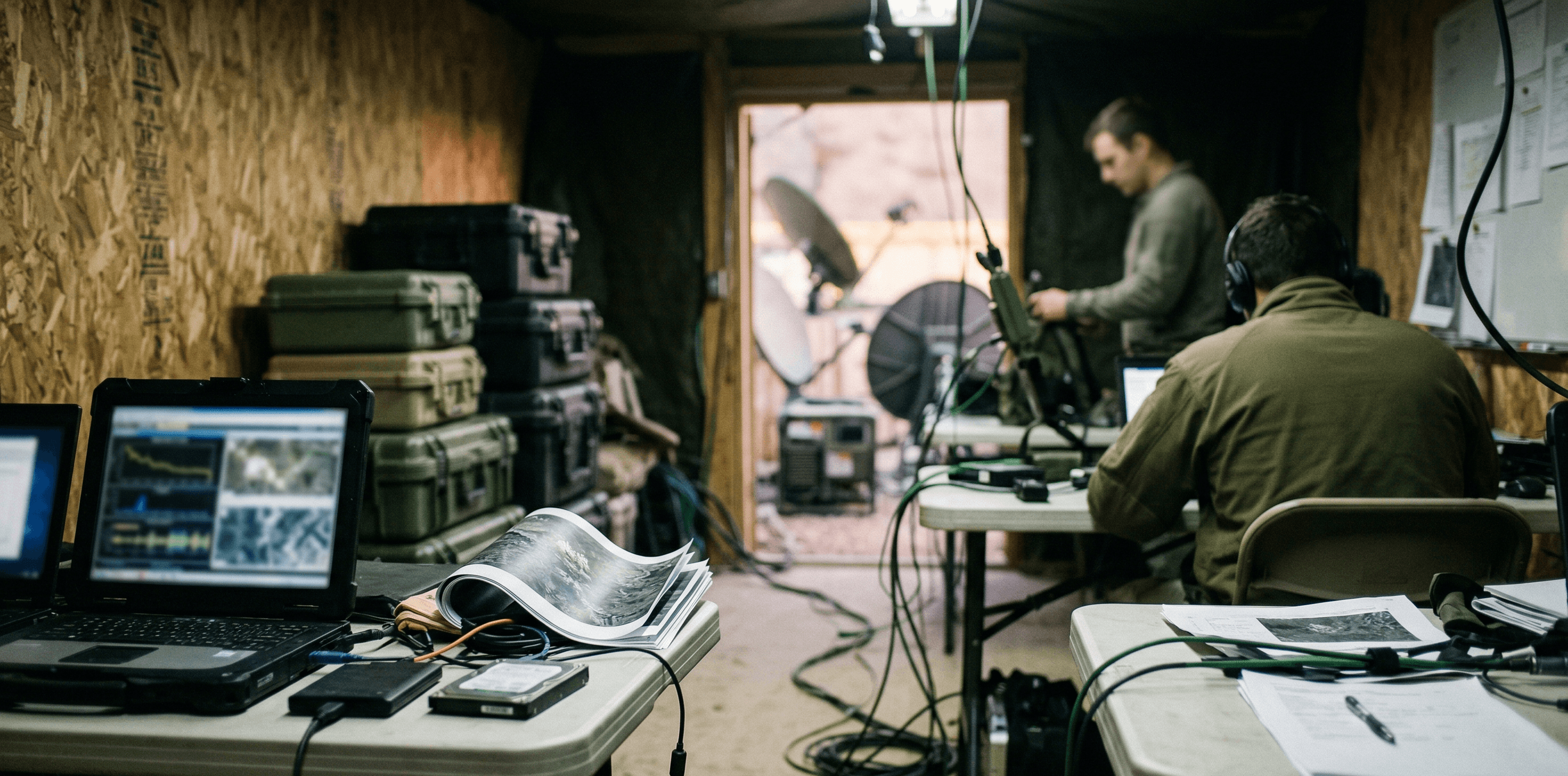
Hoplynk gives distributed intelligence operations a policy-controlled network that keeps mission data moving from collection to analysis, even when the underlying transport changes or degrades.
Transport handoffs break analysis workflows
Sensor traffic can leave a drone, tower, vehicle, or field team on radio or SATCOM and hit cellular or fixed enclaves before it reaches analysts; every boundary is a chance for session loss.
One thin uplink carries too much
Remote sites often force video, files, voice, and collaboration onto the same constrained backhaul, so one heavy feed can starve the rest of the mission thread.
Borrowed infrastructure creates exposure
Temporary facilities, partner locations, and surge workspaces inherit uneven bandwidth, local policies, and trust assumptions that are hard to normalize quickly.
Low local support turns network trouble into operator work
When a transfer stalls or a feed drops, collection and analysis teams end up manually switching links, restarting sessions, or waiting on distant admins.
Hoplynk gives distributed intelligence operations a resilient, policy-driven network layer that keeps mission data moving.
Learn how Hoplynk's solutions can work for your team.

Autonomous Network Management
Hoplynk's Hydra AI keeps routing, failover, and recovery moving across dispersed nodes so collection teams and analysts are not forced into manual link management.
Multi-Transport Resilience
Hoplynk's integrated systems enable radio, SATCOM, cellular, and fixed access to be operated as one controlled communications layer instead of separate paths with separate failure modes.
Secure Policy Control and Visibility
Hoplynk's Argus dashboard applies policy, access controls, updates, and live telemetry across the footprint so remote nodes do not drift into one-off configurations.
Sensor-to-Analyst Continuity
Mission data keeps moving from forward collection through exploitation and dissemination without pausing each time the underlying transport changes.
Predictive Reliability
Hydra's path weighting moves traffic before a weak sector, fading uplink, or overloaded local circuit turns into broken video, stalled transfers, or dropped collaboration sessions.
Solutions For Your Team
See how Hoplynk can help solve your unique communications challenges.
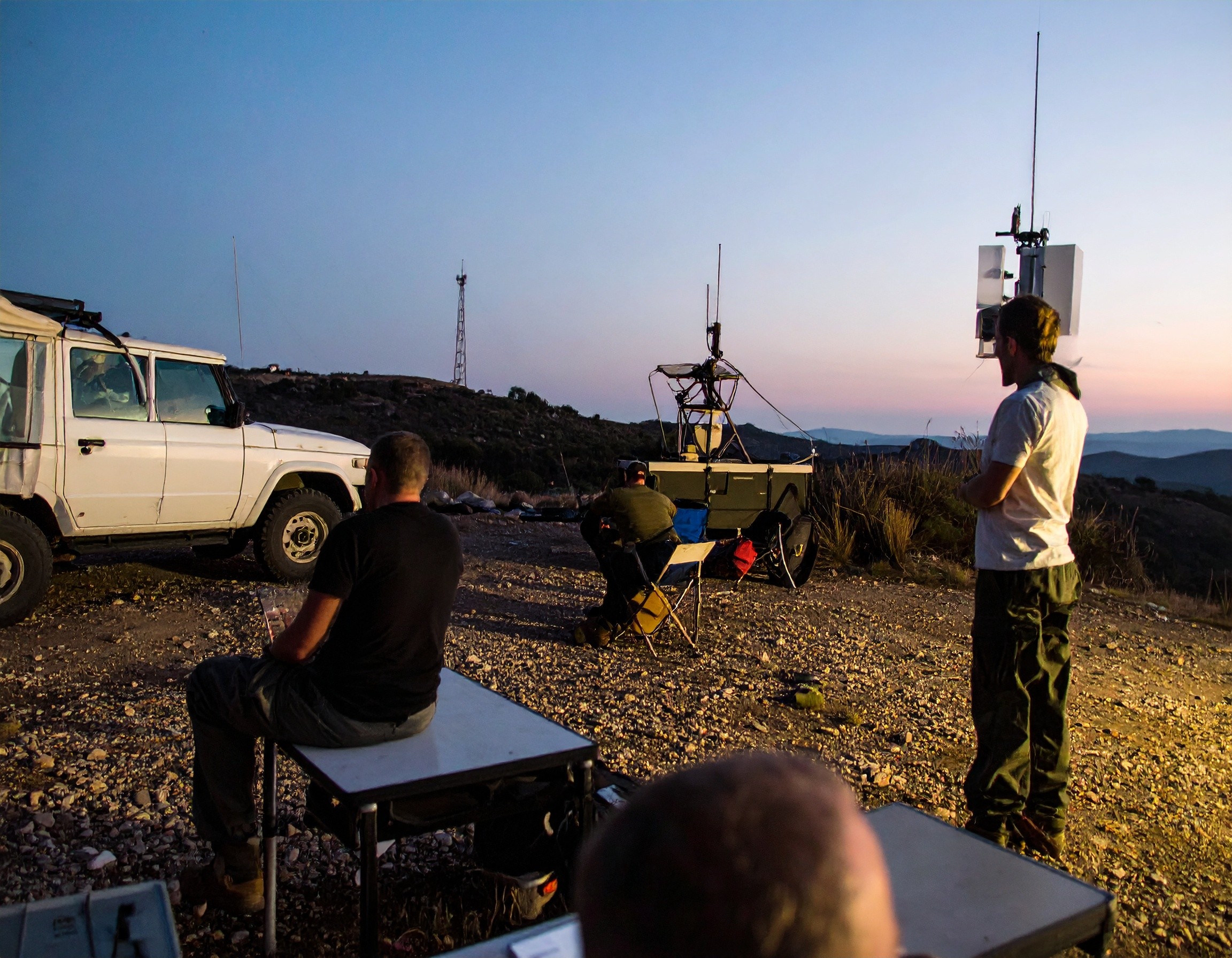
Forward Reachback
Small field teams operating off radio, SATCOM, or thin cellular uplinks need reports, files, and location data to keep moving when ordinary coverage disappears.

Mobile Exploitation
Analysis teams in temporary facilities, vehicles, or surge workspaces need stable access to sensor feeds, collaboration tools, and enterprise services without depending on a single borrowed circuit.
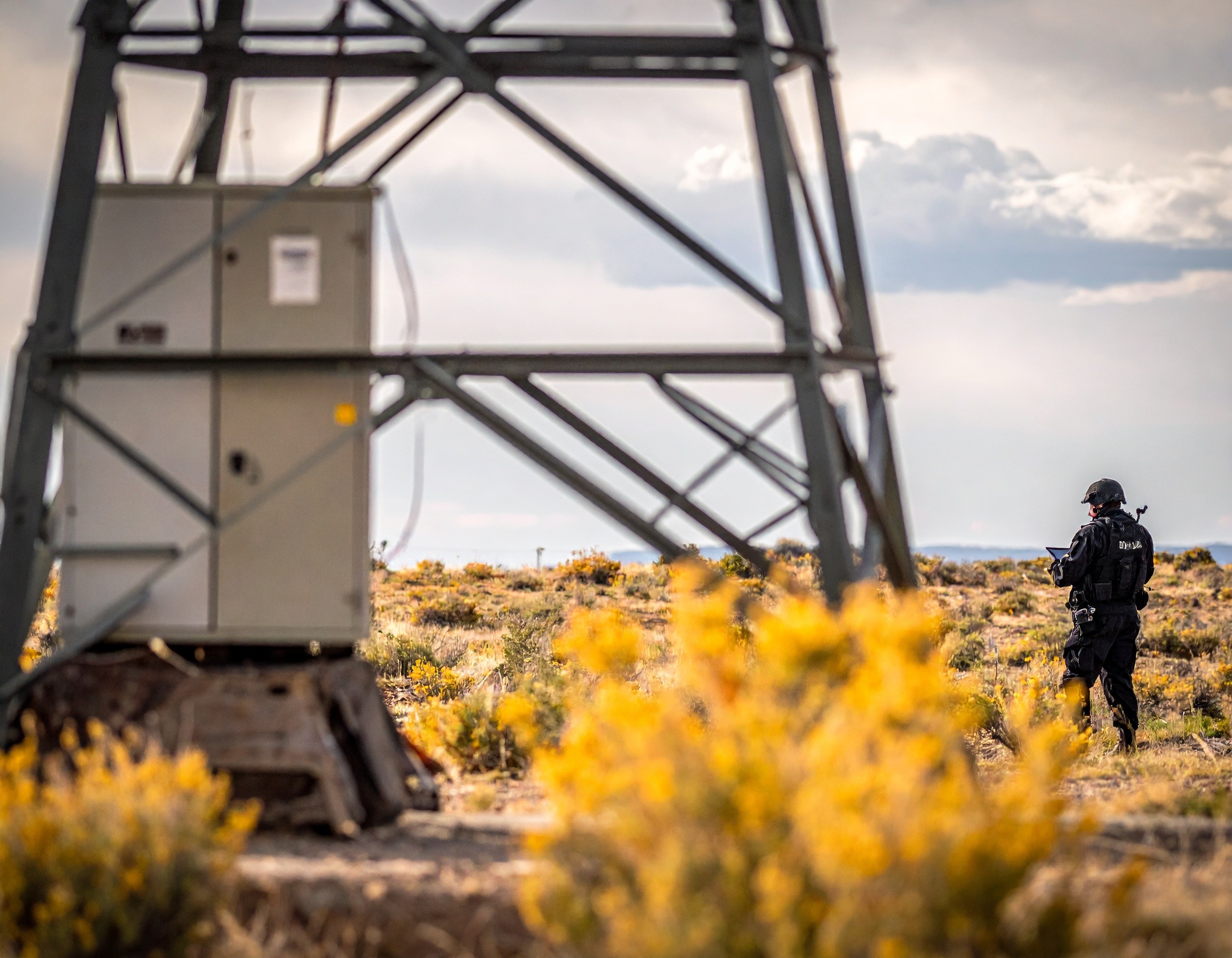
Remote Sensor Backhaul
Towers, unattended sensors, and airborne platforms generate data that has to survive the trip from edge collection to analytic review even when local processing and long-haul backhaul share constrained links.
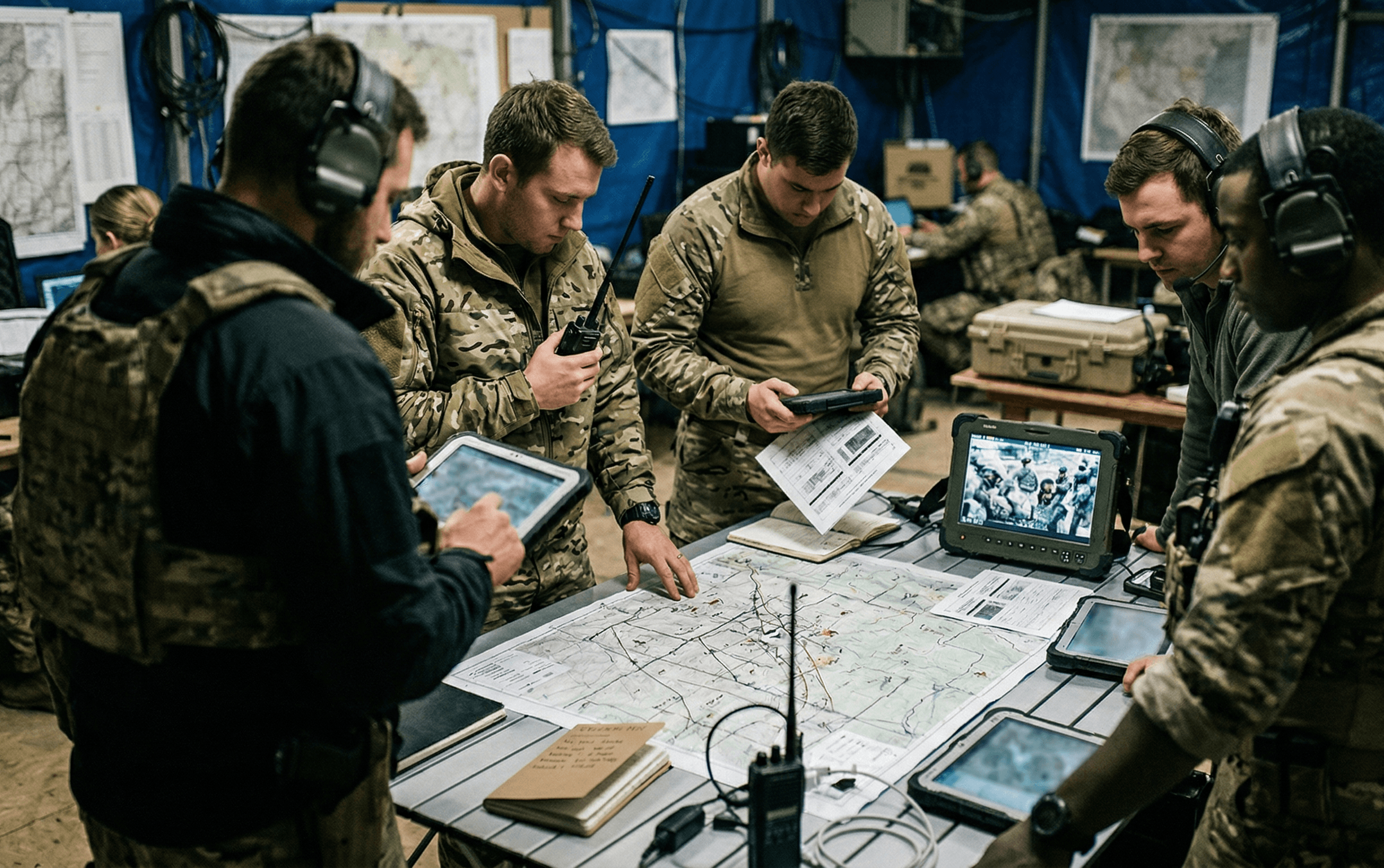
Coalition Exchange
Joint and partner teams often work across mixed transports, security domains, and temporary networks; continuity breaks when identity, routing, and access policy are handled node by node.

Expeditionary C2ISR
Small forward nodes that connect sensors, operators, and higher echelons need rapid setup, remote policy updates, and resilient backhaul as mission geometry changes.

Explore Other Industries
Learn how Hoplynk serves other groups in Defense & Government.
Temporary, mobile, or expeditionary mission sites
Mixed radio, SATCOM, cellular, and fixed backhaul environments
High-value sensor, file, and collaboration traffic sharing constrained uplinks
Forward teams and analysis cells with limited local network support
Strong policy, identity, and access-control requirements across distributed nodes
Preserves mission continuity across distributed intelligence nodes
Reduces manual network burden in sensitive environments
Supports secure movement of high-value operational data
Improves visibility and control across remote mission systems
Scales from small expeditionary footprints to larger distributed operations
See how Hoplynk can keep intelligence traffic moving from the collection edge to the analytic enterprise.
Contact us to request a private technical overview or discuss pilot deployments.